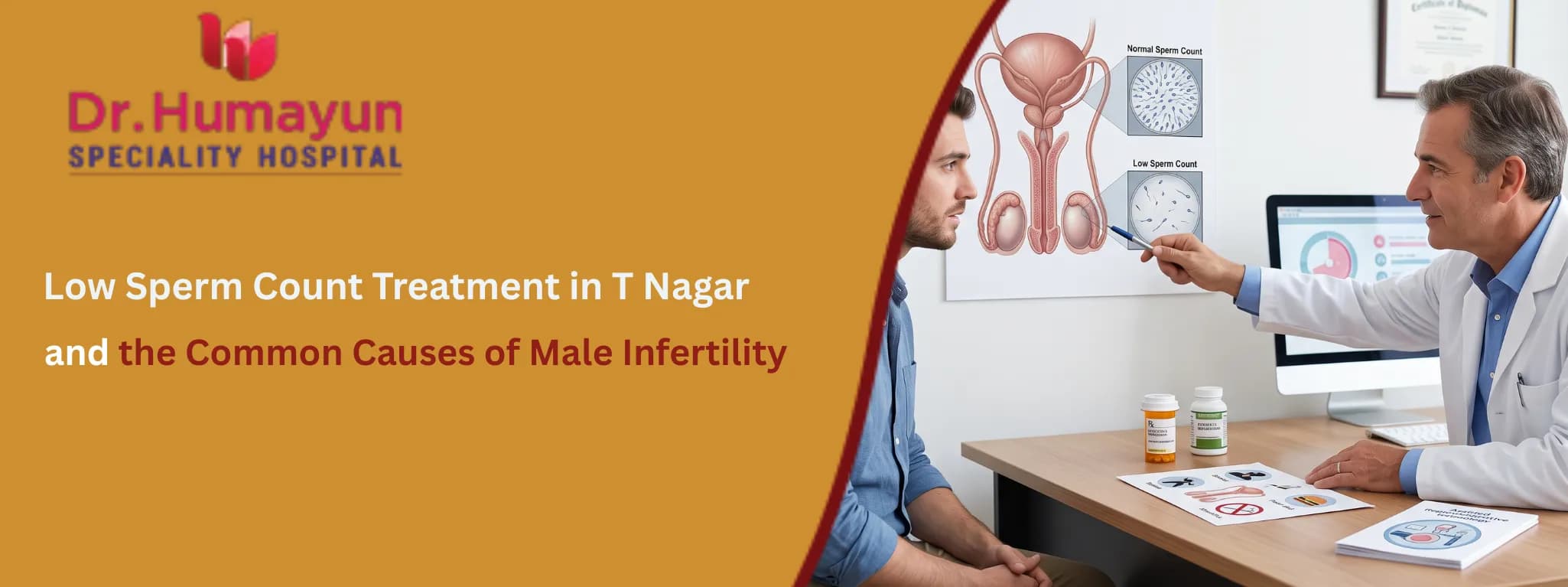

When a couple cannot conceive after a year of regular, unprotected intercourse, the instinct in many Indian families is to focus investigation on the woman. This pattern is so deeply embedded that many men are never investigated at all, and women undergo years of treatment for fertility problems that the couple shares. The evidence is straightforward and does not support this approach. Male factor infertility contributes to approximately 50% of all infertility cases, either as the sole cause or as a contributing factor alongside female causes. In many of these cases, the male factor is a low sperm count, technically called oligospermia, defined as fewer than 15 million sperm per millilitre of semen.
And in the majority of these cases, the low sperm count has an identifiable cause. Many of those causes are directly treatable. Even when the sperm count cannot be increased, modern assisted reproductive techniques including IUI, IVF, and ICSI make conception achievable for the vast majority of couples where male infertility is the challenge.
Low sperm count treatment in T Nagar at Humayun Hospital begins with the right diagnosis. This guide explains every step of that journey.
What Does a Semen Analysis Tell Us?
The foundation of male infertility assessment is a semen analysis. This is the single most important investigation for any man in an infertile couple and should be performed in parallel with the female partner's assessment from the beginning, not as an afterthought.
A semen analysis measures:
-
Sperm concentration: The number of sperm per millilitre of semen. Normal is 15 million per mL or above. Total sperm count: Concentration multiplied by ejaculate volume. Normal total sperm count is 39 million or above per ejaculate.
-
Sperm motility: The proportion of sperm that are moving. Total motility above 40%, and progressive motility (forward movement) above 32%, are considered normal.
-
Sperm morphology: The proportion of sperm with a normal shape. Using strict Kruger criteria, 4% or above is normal. Morphology below 4% is called teratospermia.
-
Ejaculate volume: Normal is 1.5 mL or above.
-
Semen pH and liquefaction time: Assess the seminal environment.
These parameters together give a comprehensive picture. A man may have oligospermia (low count) alone, or combined oligoasthenoteratospermia (OAT), where count, motility, and morphology are all below normal simultaneously.
A single semen analysis is not sufficient for diagnosis. Semen parameters vary significantly from sample to sample. The AUA/ASRM 2024 Male Infertility Guideline recommends at least two semen analyses performed two to four weeks apart, following two to five days of abstinence, before a diagnosis of oligospermia is established.
Classification of Sperm Count
Understanding the degrees of oligospermia helps patients understand where they fall and what treatment implications follow.
-
Normal: 15 million sperm per mL or above. Conception is possible through natural means, though other factors may still impair it.
-
Mild oligospermia: 10 to less than 15 million per mL. Natural conception is possible but may take longer. Lifestyle optimisation and treatment of identifiable causes are the priority.
-
Moderate oligospermia: 5 to less than 10 million per mL. Spontaneous conception is significantly impaired. IUI may be attempted with careful selection. IVF with ICSI may be more appropriate depending on other parameters.
-
Severe oligospermia: Less than 5 million per mL. Natural conception is very unlikely without assistance. IVF with ICSI is the standard recommended approach for achieving pregnancy.
-
Cryptozoospermia: Fewer than 1 million sperm per mL or sperm found only after centrifugation. IVF with ICSI is the appropriate treatment, as IUI is not effective at these counts.
-
Azoospermia: No sperm in the ejaculate at all. Divided into obstructive azoospermia (blockage prevents sperm from appearing in the ejaculate despite normal production) and non-obstructive azoospermia (severely impaired or absent sperm production in the testes). Both have specific treatment pathways.
Common Causes of Low Sperm Count
The first step in effective low sperm count treatment in Chennai is identifying the underlying cause. Treatment that is not directed at a specific cause is less likely to produce lasting improvement.
Varicocele
Varicocele is the single most common correctable cause of male infertility, accounting for approximately 40% of cases. A varicocele is an enlargement of the veins (the pampiniform plexus) that drain blood from the testicle, analogous to varicose veins in the leg.
The enlarged veins impair sperm production through several mechanisms:
-
Increased testicular temperature from pooled warm venous blood (the testis needs to be approximately 2 to 3 degrees Celsius below body temperature for optimal sperm production)
-
Reduced oxygen delivery to the germ cells
-
Accumulation of toxins from adrenal and renal venous reflux
-
Hormonal disruption from impaired testicular function
Varicoceles are graded I to III based on clinical size. They are palpable or detectable by scrotal Doppler ultrasound. Many men with varicoceles have no symptoms beyond fertility problems.
A landmark August 2025 Cureus prospective study of 100 patients with varicocele and oligospermia found that microsurgical subinguinal varicocelectomy significantly increased mean sperm count from 12.5 million per mL preoperatively to 20.2 million per mL at three months postoperatively (p less than 0.001). Grade III varicoceles showed the highest improvement. This is consistent with the established evidence base that varicocelectomy improves semen parameters in a clinically meaningful proportion of men.
The AUA/ASRM guideline supports varicocelectomy in men with clinical varicocele and abnormal semen parameters who are in a couple with otherwise unexplained infertility, with the aim of improving sperm concentration, pregnancy rate, and live birth rate.
Hormonal Imbalances
The hypothalamic-pituitary-testicular (HPT) axis regulates sperm production. FSH from the pituitary stimulates the Sertoli cells in the testis to support sperm development. LH stimulates Leydig cells to produce testosterone, which is essential locally for spermatogenesis.
When this hormonal axis is disrupted, sperm production falls. The most clinically important hormonal cause is hypogonadotropic hypogonadism (HH), where the pituitary fails to produce adequate FSH and LH. This is one of the most completely reversible causes of male infertility: hormonal replacement therapy with FSH and hCG (human chorionic gonadotrophin) restores spermatogenesis in a high proportion of men with HH, sometimes from complete azoospermia to counts sufficient for natural conception.
Other hormonal abnormalities associated with oligospermia include:
-
Elevated prolactin (hyperprolactinaemia): a pituitary adenoma producing prolactin suppresses gonadotrophin secretion. Treatment with dopamine agonists (cabergoline) normalises prolactin and often restores sperm production.
-
Thyroid dysfunction: both hypothyroidism and hyperthyroidism impair sperm production. Treatment of the thyroid condition restores spermatogenesis.
-
Testosterone replacement therapy: an important cause of oligospermia in men who are using exogenous testosterone for bodybuilding or hypogonadism. Testosterone replacement suppresses LH and FSH, shutting down testicular sperm production. Men using testosterone who wish to conceive must stop and allow the HPT axis to recover.
Genital Tract Infections and Inflammation
Past or present infections of the genital tract can damage the sperm production machinery or block the ducts through which sperm travel.
-
Sexually transmitted infections including chlamydia, gonorrhoea, and mycoplasma can cause epididymo-orchitis with secondary scarring
-
Mumps orchitis in postpubertal males causes permanent testicular damage in a proportion of cases
-
Chronic prostatitis and epididymitis produce an inflammatory environment that impairs sperm function
-
Accessory gland infections contribute white blood cells (leukocytes) to the semen, producing oxidative stress that damages sperm DNA
A white blood cell count above 1 million per mL in the semen (leukocytospermia) is an indication to investigate for and treat underlying infection. Active genitourinary infections should be specifically tested for and treated before attempting conception.
Genetic Causes
Genetic abnormalities are an important and often underdiagnosed cause of severe oligospermia and azoospermia.
Klinefelter syndrome (47,XXY): The most common genetic cause of non-obstructive azoospermia. Men have an extra X chromosome, severely impairing testicular function. Micro-TESE can find sperm in some men with Klinefelter syndrome for use in ICSI.
Y chromosome microdeletions: Deletions in specific regions of the Y chromosome (AZFa, AZFb, AZFc) disrupt genes essential for spermatogenesis. AZFc deletions have the best prognosis for finding sperm by surgical retrieval. Complete AZFa or AZFb deletions are associated with absent spermatogenesis where surgical sperm retrieval is unlikely to succeed.
Cystic fibrosis gene mutations (CFTR): Men with cystic fibrosis almost universally have congenital bilateral absence of the vas deferens (CBAVD), causing obstructive azoospermia. Male CF gene carriers with no cystic fibrosis symptoms can also have CBAVD. TESA or TESE retrieves sperm for ICSI.
Genetic testing including karyotype and Y chromosome microdeletion analysis is recommended for all men with severe oligospermia (less than 5 million per mL) and azoospermia before proceeding to assisted reproduction.


Obstructive Causes
Some men produce sperm normally but have a blockage preventing sperm from appearing in the ejaculate. This produces obstructive azoospermia (OA), characterised by normal testicular size, normal FSH, and normal testicular histology on biopsy, but no sperm in the ejaculate. Common causes of obstruction:
-
Previous vasectomy (the most common cause of OA in men seeking fertility treatment after a change in family circumstances)
-
Epididymal blockage from previous infection or epididymitis
-
Congenital bilateral absence of the vas deferens (CBAVD)
-
Post-surgical scarring from hernia repair, orchidopexy, or prostate surgery
Treatment options for obstruction include vasectomy reversal (vasovasostomy or vasoepididymostomy) performed microsurgically, and surgical sperm retrieval (PESA, TESA, TESE) with the retrieved sperm used for ICSI. The success of vasectomy reversal decreases with time since vasectomy, with microsurgical reversal most effective when performed within ten years.
Lifestyle Causes: The Most Modifiable
Lifestyle factors create reversible causes of low sperm count that can often be meaningfully improved before or alongside medical treatment.
Smoking: Cigarette smoking reduces sperm concentration by an average of 23% through oxidative stress mechanisms and vascular damage to testicular microcirculation. Both partners should stop smoking from preconception.
Alcohol: Excessive alcohol consumption decreases testosterone production and directly damages developing sperm cells. The AUA/ASRM guideline supports counselling on alcohol reduction as part of male infertility management.
Obesity: Obesity affects hormonal balance by converting testosterone to oestrogen in adipose tissue, reducing the testosterone available for testicular sperm production. It also increases scrotal temperature. Weight loss produces measurable improvements in sperm parameters in obese men.
Heat exposure: Prolonged scrotal heat from hot baths, saunas, heated car seats, tight underwear, and occupational exposures (working near heat sources) impairs sperm production. Sperm production requires a temperature below body temperature, making the scrotum vulnerable to any sustained heat.
Anabolic steroids and supplements: Testosterone and anabolic steroid use suppresses the hypothalamic-pituitary-testicular axis and can reduce sperm production to zero. Many men presenting with severe oligospermia or azoospermia are using exogenous testosterone that has never been identified because it was not asked about. Recovery of spermatogenesis after stopping steroids may take six to eighteen months.
Stress: Chronic psychological stress affects hormone production through cortisol-mediated suppression of GnRH, FSH, and LH. Oxidative stress from chronic inflammation also impairs sperm DNA integrity.
Treatment success rates for lifestyle-driven oligospermia range from 30 to 70% depending on the underlying lifestyle factor, with improvements in sperm parameters measurable within approximately three months of change, reflecting the 74-day cycle of sperm production.
Medications and Environmental Toxins
Several medications directly impair sperm production:
-
Chemotherapy and radiation therapy: significant gonadotoxic effects that may be permanent. Sperm banking before treatment is strongly recommended for men of reproductive age facing cancer treatment.
-
Sulfasalazine (used for inflammatory bowel disease): reversibly reduces sperm count and motility
-
Certain antibiotics, antifungals, and antihypertensives
-
Recreational drugs including cannabis, cocaine, and opioids
Environmental toxins including pesticides, heavy metals (lead, cadmium), phthalates, and bisphenol A (BPA) are endocrine-disrupting chemicals associated with reduced sperm count in epidemiological studies. Occupational exposure in agricultural, industrial, and chemical settings should be specifically enquired about in male infertility assessment.
Low Sperm Count Treatment Options
Treatment is directed at the specific identified cause where possible. When no specific cause is identified or when the cause is irreversible, assisted reproductive techniques are the pathway to achieving pregnancy.
Treating the Underlying Cause
Varicocele repair: Microsurgical subinguinal varicocelectomy is the gold standard, producing significant sperm count improvement in the majority of men with clinical varicocele and oligospermia as confirmed by the August 2025 Cureus study. Three to six months should be allowed after surgery for sperm production to improve before re-testing.
Hormonal treatment:
-
Hypogonadotropic hypogonadism: FSH injections combined with hCG to restore endogenous testosterone and stimulate spermatogenesis. This is one of the most rewarding treatments in male infertility because it can restore fertility from complete azoospermia.
-
Hyperprolactinaemia: cabergoline or bromocriptine normalises prolactin and restores HPT axis function
-
Thyroid dysfunction: levothyroxine for hypothyroidism, carbimazole or propylthiouracil for hyperthyroidism
Infection treatment: Appropriate antibiotics for active genital tract infection. Post-infection scarring may persist but the inflammatory burden on sperm is reduced.
Surgical treatment for obstruction:
-
Vasectomy reversal: microsurgical vasovasostomy or vasoepididymostomy
-
Surgical sperm retrieval (PESA, TESA, TESE, micro-TESE) for non-reconstructable obstruction or non-obstructive azoospermia
Empirical Medical Therapy for Idiopathic Oligospermia
In cases where no specific treatable cause is found, empirical medical therapy is sometimes used to attempt to improve sperm parameters.
Selective oestrogen receptor modulators (SERMs): clomiphene citrate and tamoxifen are used off-label to stimulate endogenous gonadotrophin release and increase testicular testosterone and FSH levels. Some studies show modest improvement in sperm count.
Antioxidant supplementation: Oxidative stress is implicated in a significant proportion of idiopathic oligospermia cases. Antioxidant supplements including coenzyme Q10, zinc, selenium, vitamin C, and vitamin E have some evidence of modest benefit in improving sperm parameters.
FSH injections: For men with low-normal FSH and idiopathic oligospermia, empirical FSH supplementation is used in some centres. The AUA/ASRM guideline notes that evidence is still developing for this approach.
Assisted Reproductive Techniques (ART)
For couples where sperm count improvement through the above measures is not achievable or is insufficient for natural conception, ART provides the pathway to parenthood.
Intrauterine insemination (IUI): Washed, concentrated sperm are placed directly into the uterus around the time of ovulation, reducing the distance sperm must travel. IUI is appropriate for mild to moderate oligospermia with adequate total motile sperm count after washing. The 2024 AUA/ASRM guideline notes that men with a low total motile sperm count should be counselled that IUI success rates may be reduced compared to couples without male factor.
IVF with ICSI: For severe oligospermia and most male factor infertility, IVF with intracytoplasmic sperm injection (ICSI) is the most effective and most widely used ART. A single sperm is injected directly into each mature egg, bypassing the need for the sperm to navigate the female reproductive tract independently. As long as viable sperm are present, ICSI can achieve fertilisation regardless of count, motility, or morphology.
IVF with ICSI and surgically retrieved sperm: For men with azoospermia, sperm are retrieved directly from the epididymis or testes and used for ICSI. The combination of micro-TESE and ICSI has transformed outcomes for men with non-obstructive azoospermia, a group for whom parenthood was previously impossible.
Sperm Banking: Preserving Fertility Before Treatment
Any man facing treatment that may harm fertility, including cancer chemotherapy, pelvic radiation, or surgery that may damage reproductive structures, should be offered sperm banking before treatment begins. Sperm cryopreservation allows future use of the patient's sperm for IUI or IVF/ICSI regardless of what happens to sperm production after treatment.
Sperm banking is also an option for men with progressive oligospermia from a known cause where sperm production may deteriorate further over time, and for men undergoing varicocele repair who want a backup in case surgical outcomes are not sufficient.
When Both Partners Need Assessment
Male infertility assessment is most meaningful when it is conducted in parallel with female partner assessment rather than sequentially. Infertility is a couples issue, and in approximately 30% of infertile couples, both male and female factors are present simultaneously.
A couple's combined fertility potential determines the most appropriate treatment path. A man with moderate oligospermia whose female partner has excellent ovarian reserve and no structural issues has different treatment options from a couple where both partners have significant contributing factors. The semen analysis result is one piece of the clinical picture, not the whole picture.
Low Sperm Count Treatment in Chennai at Humayun Hospital, T Nagar
At Humayun Hospital, T Nagar, Chennai, our fertility and internal medicine team provides comprehensive male infertility assessment and low sperm count treatment in Chennai for men and couples facing this challenge. Dr. Asma Humayun, Gynaecologist and Fertility Specialist at Humayun Hospital, holds MBBS, DGO (Sri Ramachandra University), Fellowship in Assisted Reproductive Techniques (F.ART), Fellowship in Minimal Access Surgery (F.MAS), Diploma in Reproductive Medicine from Germany, and MRCOG (Royal College of Obstetricians and Gynaecologists, UK). Her Fellowship in Assisted Reproductive Techniques (F.ART) reflects dedicated training in the clinical management of male and female infertility, IUI, IVF and ICSI protocols, and the integrated assessment of infertile couples.
We offer:
-
Semen analysis with WHO 2021 reference range reporting, advising on abstinence interval and ensuring correct sample collection
-
Repeat semen analysis at appropriate intervals to confirm diagnosis
-
Hormonal profiling including FSH, LH, testosterone, prolactin, and thyroid function
-
Genetic testing referral for karyotype and Y chromosome microdeletion in severe oligospermia and azoospermia
-
Scrotal Doppler ultrasound for varicocele assessment
-
Coordination with urology for varicocelectomy, vasectomy reversal, and surgical sperm retrieval
-
Empirical medical therapy for idiopathic oligospermia with monitoring of response
-
IUI cycles for mild male factor with monitoring of ovulation
-
IVF with ICSI for moderate to severe oligospermia, OAT syndrome, and azoospermia with surgical sperm retrieval
-
Sperm banking for men undergoing cancer treatment or at risk of progressive fertility decline
-
Psychological support and counselling for couples navigating the emotional challenge of male infertility
A diagnosis of low sperm count does not mean the end of the journey toward having a family. It is the starting point for a clinical process that, with the right assessment and the right treatment, leads the large majority of affected couples to parenthood.
Chat with our medical assistant for quick guidance and support.